
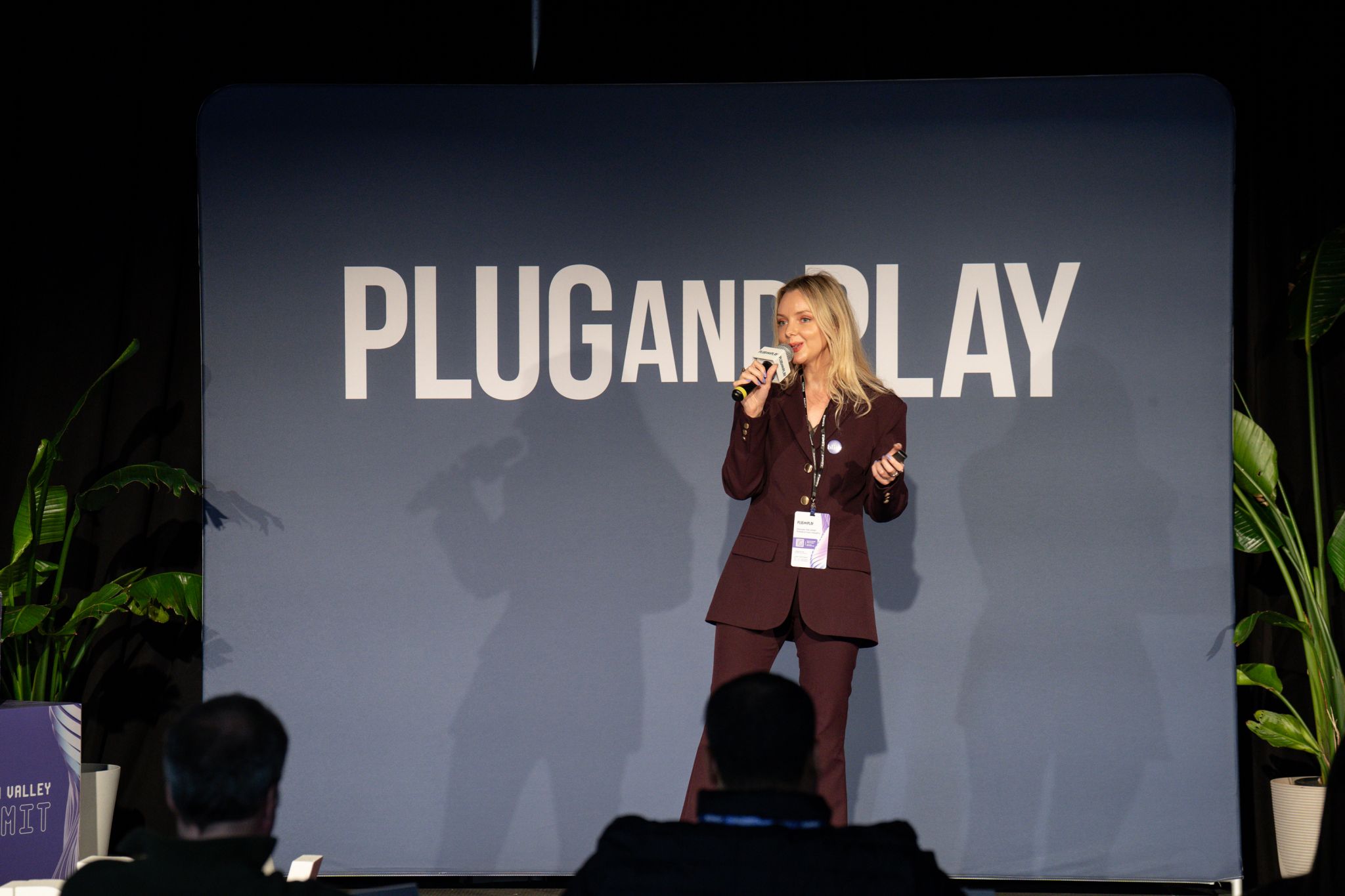
In this article, we are pleased to interview Jona Doda, founder of Bliss, an online therapy platform that makes mental health care more accessible to underserved diaspora communities. Recognized as the Most Influential Woman in FinTech Marketing (South East England) and featured in the Women in FinTech Powerlist, she has also represented startups on the global stage, including serving as the official face of the Visa Everywhere Initiative in 2021. She was recently considered as a candidate for the Forbes 30 Under 30 Social Impact list.
Table of Contents
Tell us about yourself: what educational path did you follow and what has your entrepreneurial journey been like?
My path wasn’t linear, which I think is actually the most honest thing I can say about it. I moved to the UK at 16, the first Albanian student ever at my school. That was my first real lesson in navigating a world that wasn’t built for you. From there I studied Economics at The London School of Economics and Political Science (LSE), then completed a Master of Science in Marketing at the University of Leicester.
I’ve spent over a decade working in startups, across fintech, proptech, climatetech. That breadth taught me how to move fast in early-stage environments, read markets, and build from near zero. Bliss is where all of it converges: the commercial experience, the cultural fluency, and the personal.
Which entrepreneur(s) inspire you in terms of mindset and vision? Why?
My dad. 🙂 He’s relentlessly optimistic, not in a naive way, but in the way that keeps you going when the rational thing would be to stop. He taught me to work hard and play harder. To never get so consumed by building that you forget to actually live. That’s the mindset I try to carry into Bliss, ambition without losing yourself in it.
Everything else I’ve learned from entrepreneurs has been additive. But that foundation came from home.
How and when did the idea of creating an online service to support mental health come about?
It came from lived experience, not a whiteboard session. I knew firsthand how hard it is to find a therapist who actually understands your cultural context, your language, your family dynamics, your migration story. The generic Western therapy model often misses the mark for diaspora communities entirely.
At the same time, I was watching the teletherapy wave grow in the US and Western Europe, and I kept asking: why isn’t this being built for us? For Albanians in Italy, Filipinos in the UAE, Brazilians in Finland? That gap felt inexcusable. So I decided to close it.
Tell us about Bliss: how does it work and who is it for?
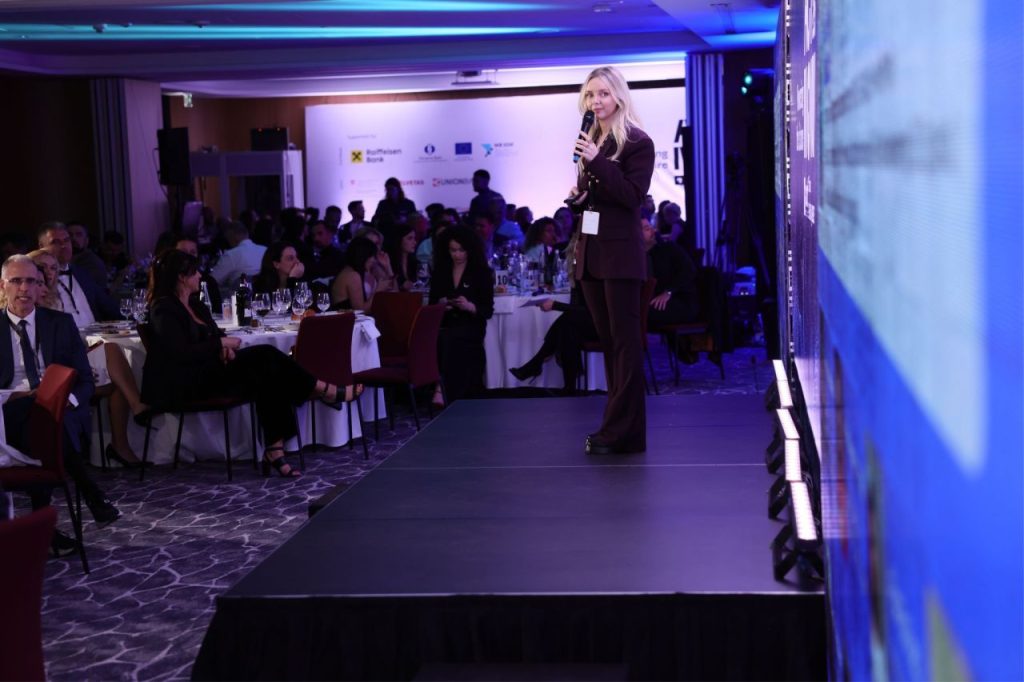
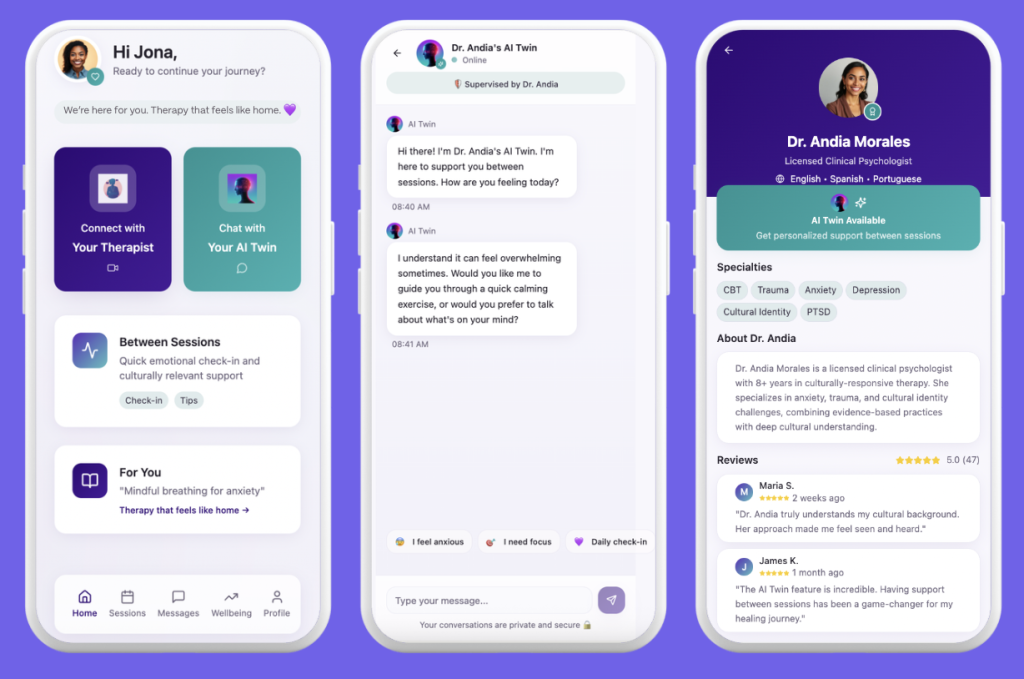
Bliss is a culturally attuned mental health platform. We connect diaspora and multicultural communities with licensed therapists and coaches who share their cultural background, people who get it without you having to explain everything from scratch.
We work across three models: direct-to-consumer for individuals seeking therapy or coaching, B2B corporate wellness for companies with multicultural workforces, and a SaaS layer for practitioners who want to work more efficiently. We also have an AI companion for between-session support, not a replacement for therapy, but a thoughtful bridge.
The startup is now headquartered in Finland, the happiest country in the world, and we operate across multiple markets. Our primary audience is diaspora communities and international professionals. People living far from home who are navigating life in a second or third language.
What challenges did you face at the beginning of launching Bliss, both from a psychological and entrepreneurial perspective?
Entrepreneurially: building trust in a sensitive category is slow. Mental health still carries stigma in many of the communities we serve. You can’t just run ads and expect people to open up. You have to earn it, through community, through content, through showing up consistently over time.
Psychologically: there’s a particular weight that comes with building in a space where the stakes are genuinely high. You’re not selling software, you’re potentially the first touchpoint between someone and help. That responsibility doesn’t let you be sloppy.
And then there’s the personal dimension. Using my own lived experience as fuel is powerful, but it also means the work is never fully separate from who I am. Learning to hold that without burning out has been its own kind of growth.
You started in Albania. Do you have plans to expand internationally?
We were always built to be international, the diaspora is inherently cross-border. Albania was a natural starting point given my roots and network. But the platform is already operating across multiple markets.
The expansion isn’t about planting flags in new countries sequentially. It’s about following the communities, Albanian diaspora in Italy and Germany, Brazilian communities in the US and Portugal, and so on. The cultural thread is the product.
Recently, you raised more than €200,000 from Keiretsu Forum, Finest Love VC, and Plug and Play. How do you plan to invest this funding?
The priority is product depth and market validation. Concretely: strengthening the AI companion layer, expanding our practitioner network across key diaspora corridors, and scaling the B2B pipeline, particularly corporate wellness clients with multicultural workforces.
We’re also investing in compliance infrastructure, which matters enormously in the EU mental health and AI space. Getting GDPR and EU AI Act compliance right isn’t just legal hygiene, it’s a competitive moat when enterprise clients are evaluating you.
The raise also buys us time to prove the metrics that will anchor the next round. We’re building deliberately, not burning fast.